
“If Only I Had Knew Then”‘: Ryan Reynolds Opens Up About His Late Father’s Hallucinations
When Ryan Reynolds’ father, former police officer James Chester Reynolds, was diagnosed with Parkinson’s disease, he was 22 years old. However, their Vancouver family hardly ever talked about it. As far as I can tell, he said the phrase “Parkinson’s” maybe three times, and one of those mentions wasn’t to me.
Reynolds’ father passed away in 2015 at the age of 74 from the sickness he had been fighting for almost 20 years. “There was a ton of denial, a ton of hiding,” she adds.
The two had a difficult relationship, which was made worse by the Deadpool and Wolverine actor’s father’s experiences with delusions and hallucinations, two less well-known Parkinson’s disease symptoms, which started about ten years after James was diagnosed.
“I didn’t really know what was going on, so it really destabilized my relationship with him,” says Ryan, who is involved with the educational campaign More to Parkinson’s, which provides tools for patients and caregivers.
The youngest of four brothers, Ryan, 47, welcomed his own four children—James, 9, Inez, 7, Betty, 4, and Olin, 1—with his wife, 36-year-old Blake Lively, nine years after the loss of his father. In this week’s edition of People, he shares with them his insights about parenting and the knowledge he has received about Parkinson’s disease.
There were various reasons why Ryan’s connection with his father was difficult.
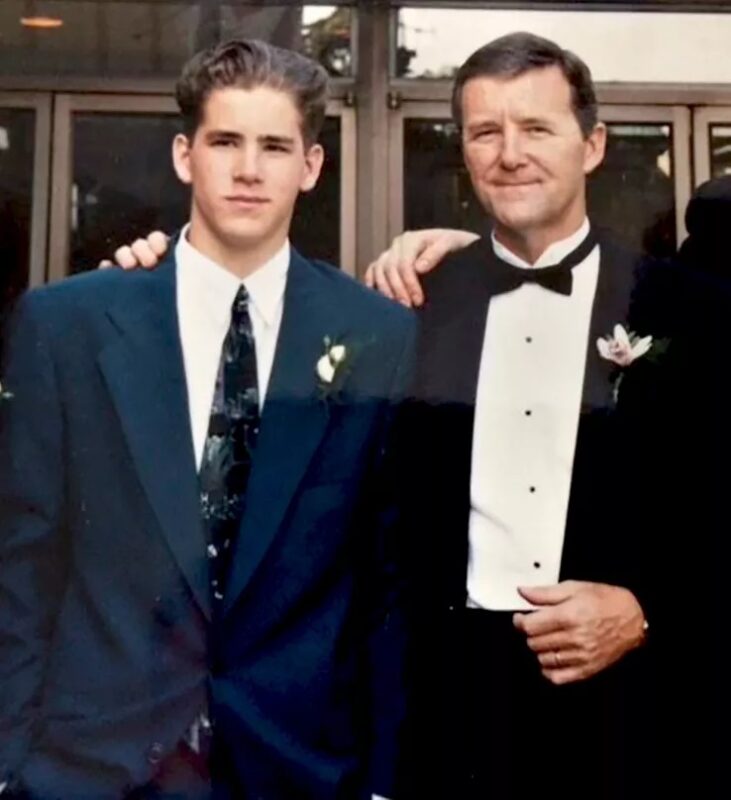
I must state up front that my father was a man who did not have the same emotions as him. He was a cop, a boxer, and a rough man. I don’t even think I ever actually had a formal discussion with my father. He was a kind father who never missed a football game, but he simply lacked the ability to experience the whole range of human emotions, or at least to partially share them. And practically everything he did was dictated by his pride, which was deeply engrained in him.
Ryan experienced greater difficulty in their relationship as a result of James’s growing delusions and hallucinations, which deepened their gap.
I simply thought, “My dad’s losing his mind,” at the time. My father was having a hard time telling the difference between fact and fiction because he was truly falling down a rabbit hole. Everyone else in his life was consequently beginning to doubt his point of view, and this was happening on a regular basis.
He used to concoct conspiracy theories about “this is happening,” “these people might be after me,” and “this person is out to get me.” And simply general things that were such a radical change from the man I knew and grew up with.
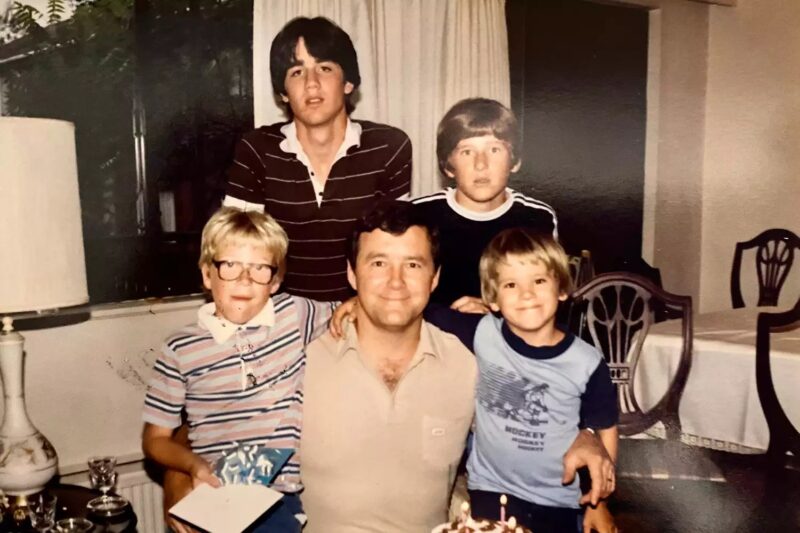
Ryan claims that he gave their dynamic greater thought in the years after his father’s passing.
I’m always piecing together the narrative. I wasn’t truly taking ownership of my actions. I found it quite simple to accept the notion that my father and I are diametrically opposed to one another and that we cannot have a genuine relationship.
And now that I’m older, when I think back on it, I see that it was primarily my inability to meet him where he was at the time. Maybe toward the end, I should have been there with him, but I wasn’t. We simply drifted away, and I will always be at peace with that.
However, there were several instances [of connection] and subtlety. About five months before he passed away, I wrote my dad a letter, for which I am really thankful. The letter was essentially a rundown of all the incredible things he had ever done, like showing up or playing catch with me after baseball practice.
Each time he was simply present. And if the man was incapable of dynamically expressing his feelings, then a lot of people aren’t either. The man’s birth year was 1940. It’s alright. I am really appreciative that I wrote the letter. It truly meant the world to him, I’m sure of it.
I did, therefore, receive that closure, but I wish I had been there him when he went away.
James was mostly cared for by Ryan’s mother Tammy while he battled Parkinson’s disease-related delusions and motor symptoms.
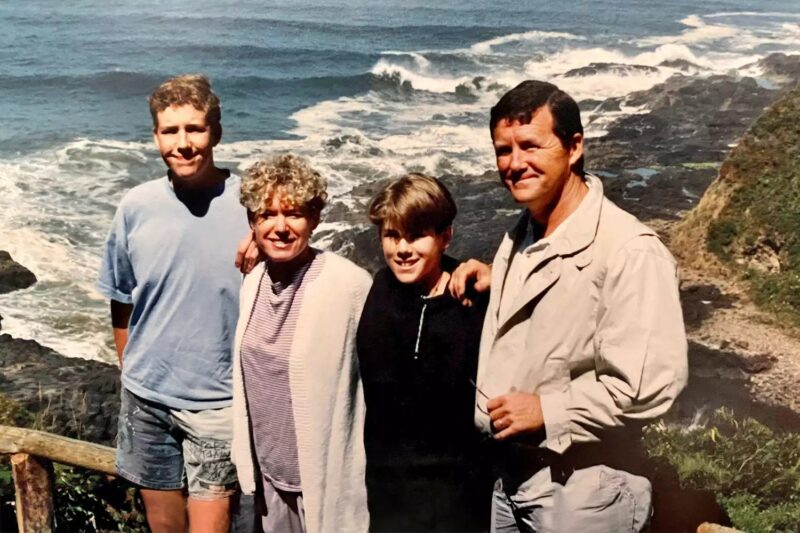
I believe my mom and my dad led a very alone life for a very long time. Additionally, when someone speaks out of habit or out of the proper frame of mind, they can truly make things difficult for the lone person present. During that period, my mother supported my father a lot, but it truly broke her.
Caregiver tiredness is a real condition and one of the most likely unreported side effects of illnesses such as this one. If only we had known about the resources that are now available to treat that aspect of Parkinson’s disease back then, it would have given us a great deal of optimism.
When Ryan became a parent and gave his oldest child the name James, he gained greater perspective. Despite absorbing some extremely valuable things from my father, the bond I have with my own children is actually where I find the most healing.
My father was a man of great integrity. He was not dishonest. I get to plug in those tiny holes that would have injured me now. I get to be present. My dad would withdraw into the power of silence when my child misbehaved or told me I was the worst, and it is not the appropriate way to respond to your child. Thus, to be able to relate to them on a personal level and just let them know that I support and believe in them… I think, “Oh, right. I just oddly solved something with my own dad—I didn’t mean to.”